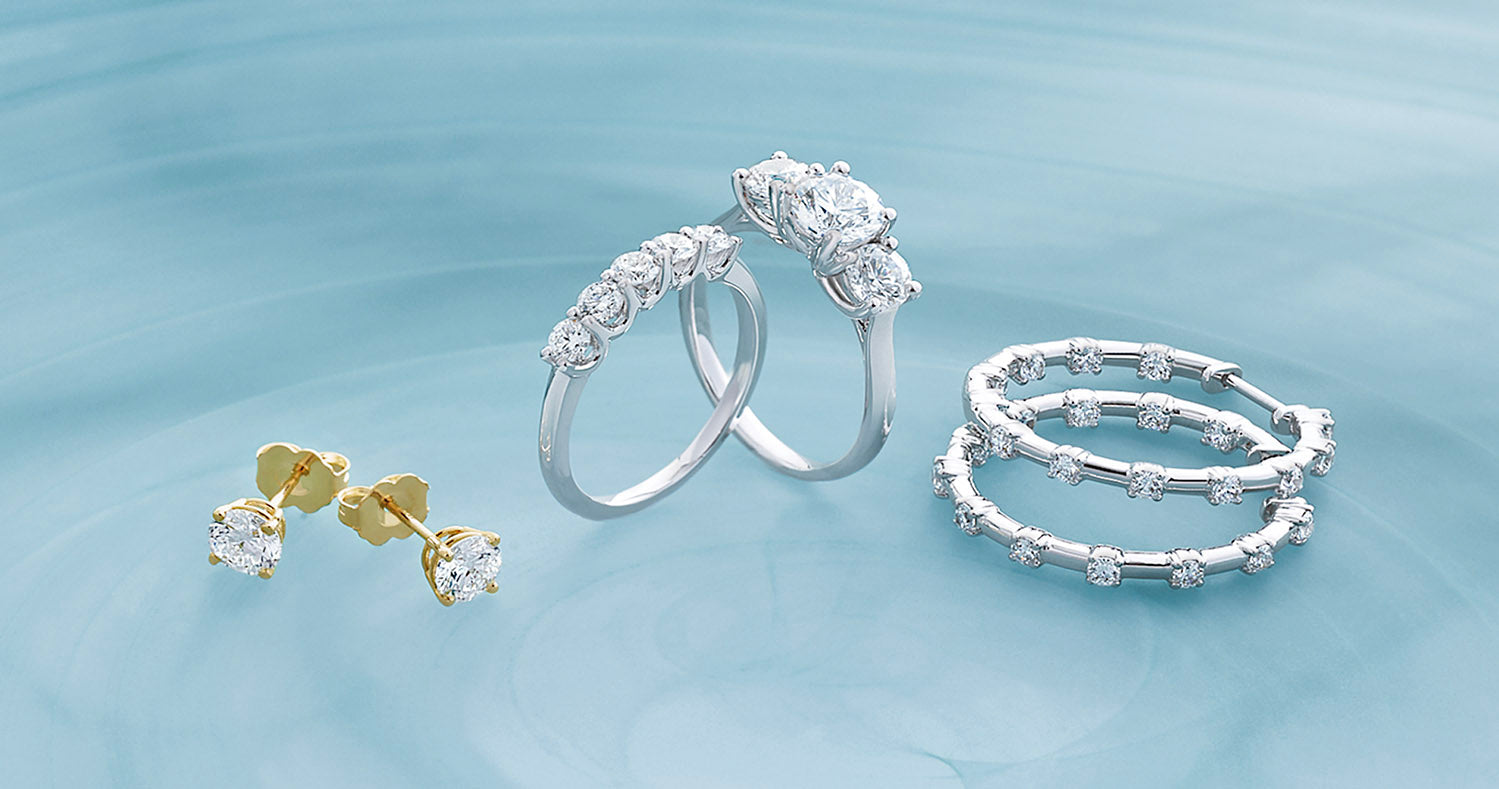

A diamond necklace may look beautiful in its presentation box, yet disappear against an intricately embroidered wedding dress. Similarly, statement earrings that appear striking on their own can compete with an elaborate neckline or bridal hairstyle.
The difference often comes down to proportion rather than the size or price of the diamonds.
A bridal diamond jewellery set works best when its individual pieces complement the dress, hairstyle and engagement ring without competing for attention. Understanding how diamond shapes, settings and metal finishes interact can help brides choose jewellery that feels coordinated on the wedding day and remains wearable afterwards.
Table of Contents
Start with the Dress, Not the Diamonds
The neckline of a wedding dress influences which jewellery combinations work visually.
A strapless gown leaves room for a diamond pendant or a delicate tennis necklace. With a high neckline, however, earrings may be a better focal point because a necklace can interrupt the dress’s detailing.
For a V-neck gown, a pendant that follows the neckline often creates a more balanced appearance than a short, horizontal necklace.
Fabric matters as well. Heavily embellished gowns already reflect considerable light, so a restrained diamond set can provide definition without making the overall look too busy.
A simple satin or crepe dress allows greater freedom to introduce larger stones, drop earrings or more elaborate settings.
The practical test is to view the complete outfit from several steps away. Jewellery should remain visible without overwhelming the details that make the dress distinctive.
Should Every Piece Have the Same Diamond Shape?
Matching bridal jewellery does not require identical diamonds in every piece.
Round brilliant diamonds, for example, can sit comfortably alongside an oval engagement ring because their faceting produces a related visual character. Emerald-cut diamonds offer a quieter, geometric appearance that may suit a structured gown.
The relationship between the pieces matters more than strict uniformity.
A coordinated set might combine:
- Round diamond studs with a round solitaire pendant for a clean, understated look.
- Pear-shaped drop earrings with a small diamond necklace for softer, elongated proportions.
- Emerald-cut earrings with a fine diamond bracelet for a more architectural style.
- A diamond tennis necklace with simple studs to keep the emphasis around the neckline.
When comparing a bridal diamond jewellery set, consider the relative size and setting style of each piece rather than choosing purely because the items are sold together.
A necklace with substantial diamonds can overpower very small earrings, while two equally elaborate pieces may compete visually. Coordinating the scale often produces a more considered result.
Lab-Grown Diamonds and the Bridal Budget
Lab-grown diamonds provide another option for brides comparing diamond jewellery within a defined budget.
They are diamonds with essentially the same chemical composition, crystal structure and optical properties as natural diamonds. Their principal distinction is origin: laboratory production rather than geological formation.
Lab-grown diamonds generally cost less than comparable natural diamonds, although prices vary by retailer, specifications and design.
That difference may allow a buyer to consider a matching necklace and earrings instead of purchasing a single larger piece.
Still, allocating the budget intelligently is more useful than simply maximising carat weight.
For round brilliant diamonds, cut quality strongly influences brightness and sparkle. A well-cut smaller diamond may appear more lively than a larger stone with less favourable proportions.
For earrings containing several stones, consistent colour appearance and visual matching deserve attention. In a necklace, the flexibility of the setting and the way the stones sit against the skin can matter as much as their individual grades.
Buyers should also distinguish between a diamond grading report for an individual stone and a retailer’s description of the quality range used in a multi-stone piece.
Metal Colour Changes the Entire Effect
The metal surrounding diamonds affects how a bridal set relates to the dress and other jewellery.
White gold and platinum create a relatively neutral appearance around colourless diamonds. Yellow gold introduces warmth, particularly against ivory, champagne or cream-coloured fabrics. Rose gold produces a softer pink-toned contrast.
There is no requirement for every bridal accessory to share the same metal colour.
However, if the engagement ring, wedding band and bridal earrings will appear close together in photographs, checking their combined appearance is worthwhile.
Practical properties deserve attention too.
Platinum is naturally white and does not require rhodium plating. White gold is commonly rhodium-plated to achieve its bright white finish and may need replating as the surface wears.
For frequently worn jewellery, these maintenance differences can affect the long-term experience.
Comfort and Security Deserve a Place in the Design
Wedding jewellery must perform beyond the initial photographs.
Heavy earrings can become uncomfortable lab made diamonds a long ceremony and reception. A necklace that twists repeatedly may require constant adjustment, especially when its pendant is relatively heavy compared with the chain.
Before ordering, examine the construction.
Stud earrings should have secure backs suited to their weight. Drop earrings need enough movement to hang naturally without catching on hair or delicate fabric.
For diamond bracelets, check the clasp mechanism and whether an additional safety feature is provided.
Prong settings expose more of a diamond’s surface, but their claws should be checked periodically for wear or loosening. Bezel settings surround the stone’s edge and can offer additional protection, although they produce a different appearance.
Trying on jewellery with a similar hairstyle and neckline can reveal problems that product photographs cannot show.
Ordering a Set Without Last-Minute Compromises
For UK brides, ordering timelines deserve particular attention when choosing personalised or made-to-order pieces.
Ask the jeweller whether the items are held in stock, made after purchase or require alterations. Confirm the estimated dispatch date, delivery arrangements and any restrictions on returning customised jewellery.
It is also useful to establish whether the quoted price includes VAT and whether individual diamonds have grading reports from recognised laboratories such as IGI or GIA, where applicable.
Before confirming an order, request the actual chain length, earring dimensions and total diamond carat weight. Total carat weight describes the combined weight of the diamonds, not the weight of each individual stone.
These measurements help prevent surprises, particularly when comparing jewellery photographed at different scales.
Plan for the Years After the Wedding
A bridal set deserves consideration beyond its appearance during the ceremony.
Diamond studs, a solitaire pendant and a fine tennis bracelet can often be worn separately for work, dinners or special occasions. Larger chandelier earrings and elaborate necklaces may be better suited to formal events.
For someone planning regular wear, comfortable proportions, secure settings and manageable maintenance may offer greater practical value than an elaborate matching design.
Consider whether the necklace can be adjusted to different lengths, whether the earrings feel comfortable after several hours and whether the bracelet can be resized or serviced.
It is also worth asking the jeweller about cleaning, stone inspections and repair arrangements.
The most useful bridal jewellery decisions are those that respect both the wedding outfit and the circumstances in which each piece will be worn again.